Science-based tree care for Cedar Park homes and businesses, from Buttercup Creek and Cypress Creek to the neighborhoods along Whitestone Blvd and Brushy Creek.
14+ Years
Serving Central Texas since 2012
ISA Certified
Arborists on staff • Oak Wilt Qualified
4.9 ★
166 Google reviews
Free
Estimates
Cedar Park started out as “Running Brushy,” and it was renamed for the Ashe juniper, locally called cedar, that still covers the hills northwest of Austin. The city sits where the Hill Country meets the suburbs: thin, rocky soil over limestone, Brushy Creek winding east toward Round Rock, Lake Travis just to the west and the karst caves of the Buttercup Creek area underfoot. Live oaks, cedar elms and Texas red oaks shade neighborhoods from Twin Creeks to Anderson Mill West.
That landscape is beautiful, but it’s hard on trees. Roots have little soil to work with before they hit rock, summer drought hits shallow-rooted trees hard, and oak wilt spreads through the connected root systems of live oaks. At the same time, Cedar Park keeps growing, with new homes along the Parmer Lane and Ronald Reagan Blvd corridor and redevelopment in the Bell District. Construction, compacted soil and buried root flares all add stress. Professional tree trimming services in Cedar Park, TX help your trees stay healthy, safe and good-looking through all of it.
Capitol Tree Care has cared for trees across Central Texas since 2012, and Cedar Park is a regular part of our route up US 183 and 183A. We prune mature oaks over family homes, remove hazardous trees before storm season, grind stumps, feed stressed trees and help builders protect the trees they want to keep. Every job is planned by an ISA Certified Arborist.

Every service we offer in Austin is available in Cedar Park, from the neighborhoods along Cypress Creek Rd to the homes tucked between Whitestone Blvd and Brushy Creek. Each job is scoped by an ISA Certified Arborist who knows how live oaks, cedar elms and Ashe junipers behave in Cedar Park’s thin, rocky soil.
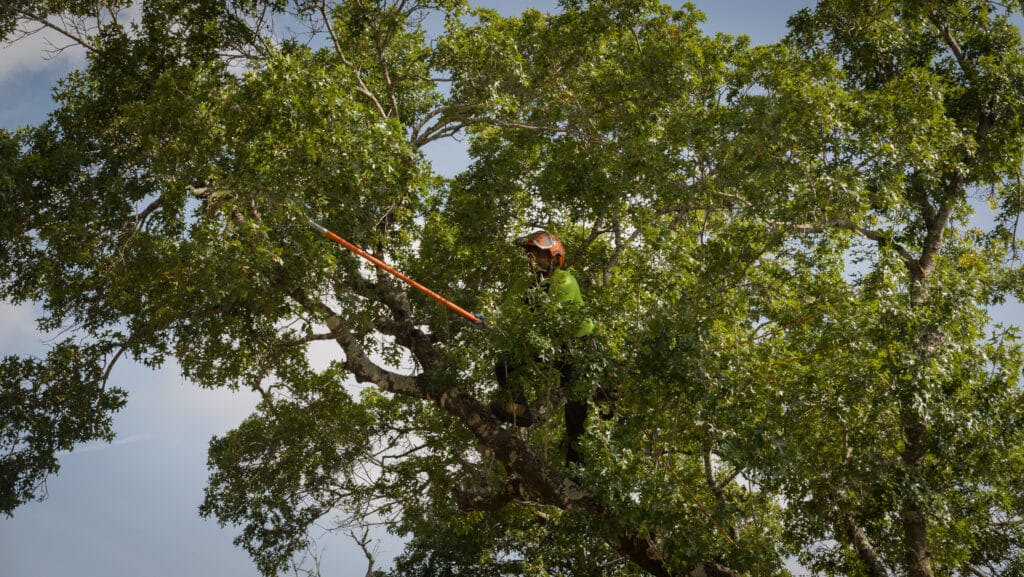
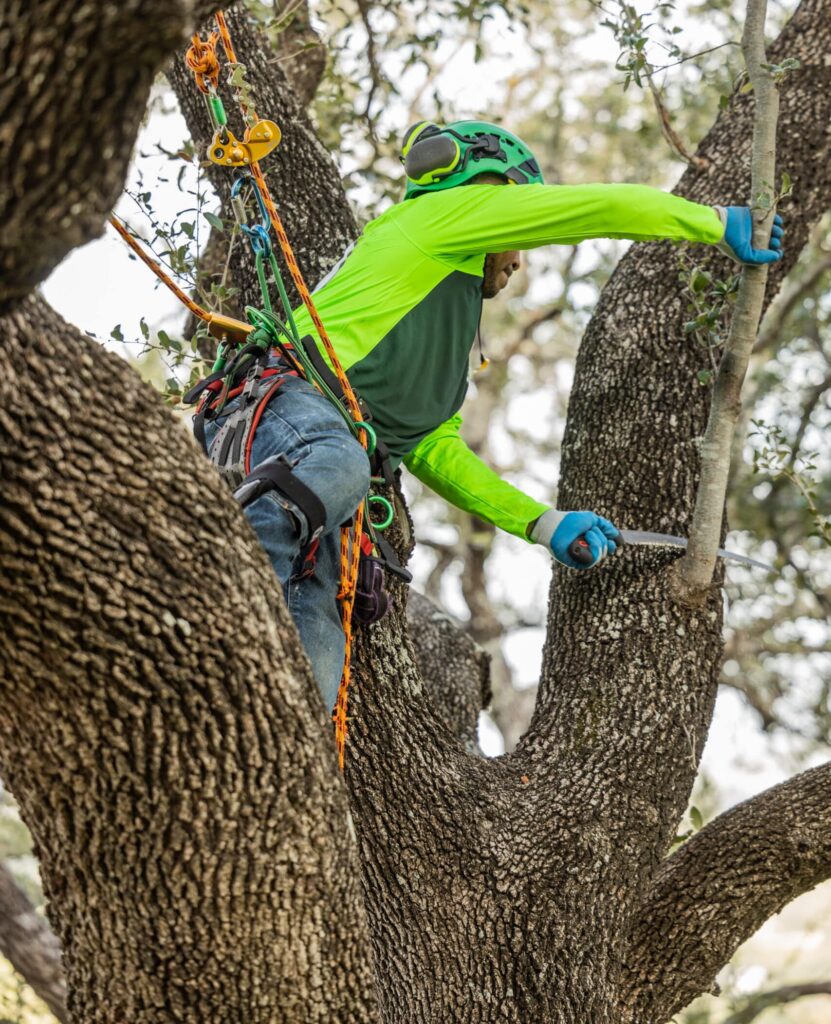
Mature live oaks shade much of Buttercup Creek, Twin Creeks and Forest Oaks, and they need thoughtful pruning, not a quick hack job. Our arborists thin crowns for airflow, raise limbs off roofs and driveways, and clean out deadwood. We follow Texas A&M Forest Service oak wilt guidelines, so we schedule oak pruning outside the February–June window and seal every cut. The result is a tree that looks natural and stays strong through Central Texas storms.
Services include:
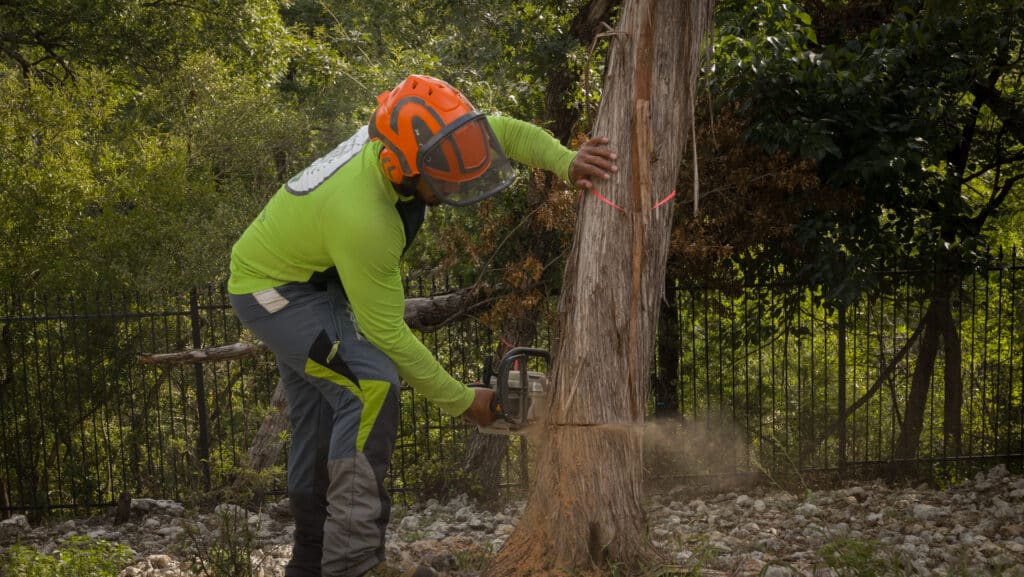
Sometimes a tree near a Cypress Creek home or above a fence line off Lakeline Blvd is too far gone to save. Before we recommend removal, an ISA Certified Arborist confirms it is truly needed, not just an easy sale. When a tree does have to come down, our insured crew rigs it down in sections, protects your landscape and hauls away every piece. For larger trees on lots under development, we can also help you understand Cedar Park’s protected and heritage tree rules.
Services include:
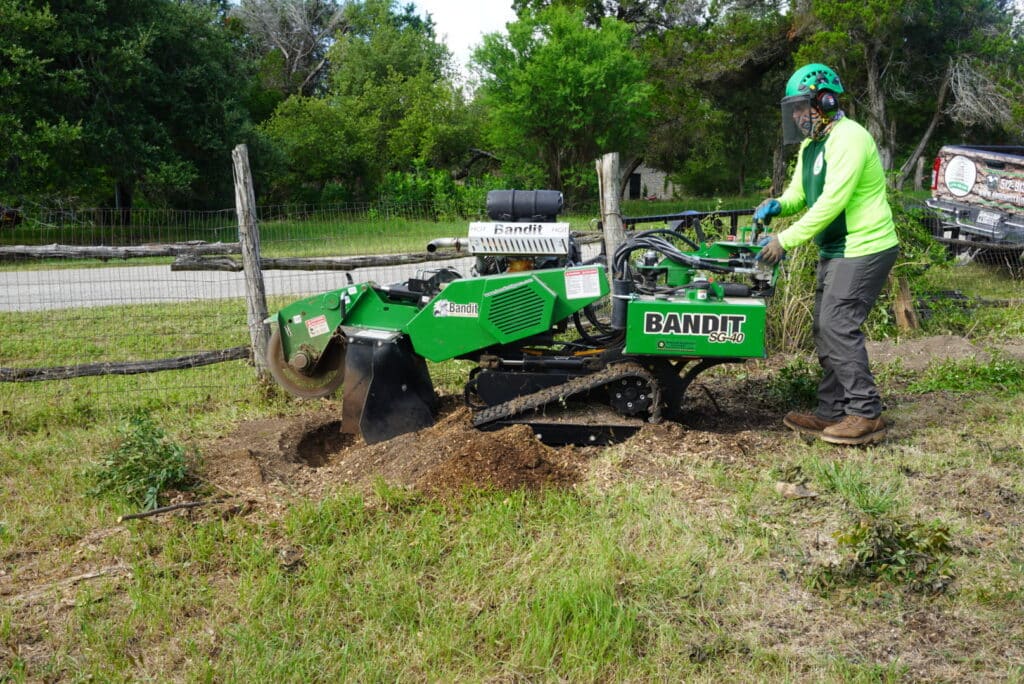
An old juniper or oak stump can sit for years on Cedar Park’s limestone ground, sprouting suckers and getting in the way of a new lawn. We grind stumps and surface roots well below grade, then leave soft soil so you can replant or lay sod. Stump grinding works with any of our removals or on its own. It’s a common request from homeowners in Anderson Mill West and Silverado who inherited stumps from a previous owner.
Services include:
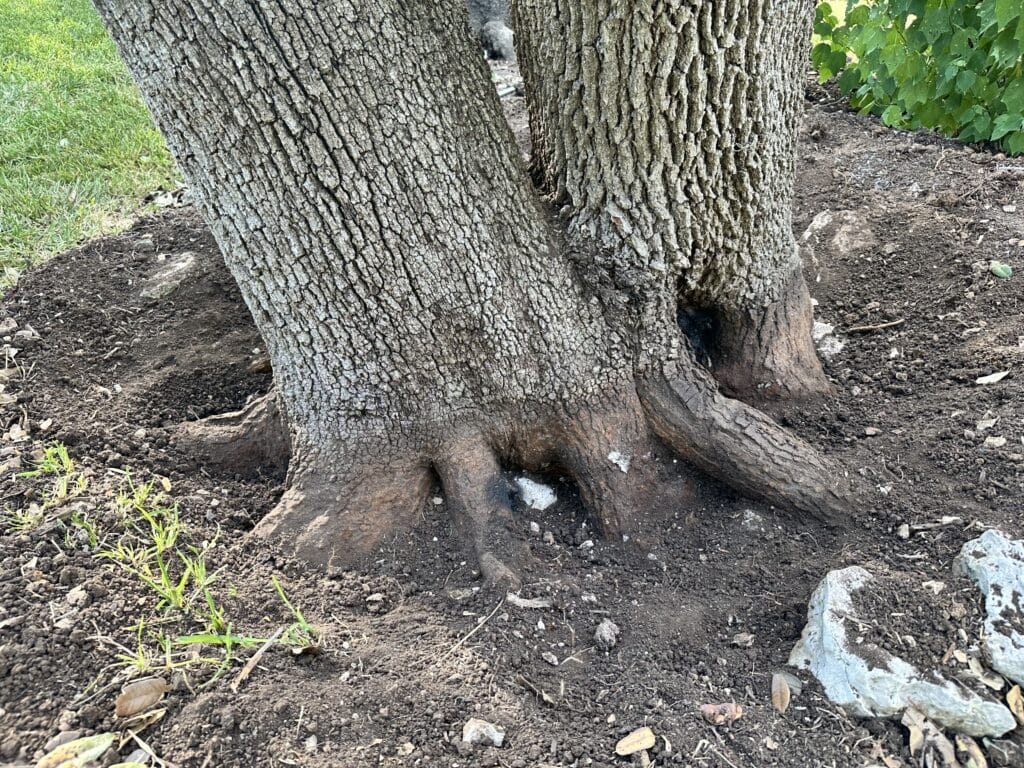
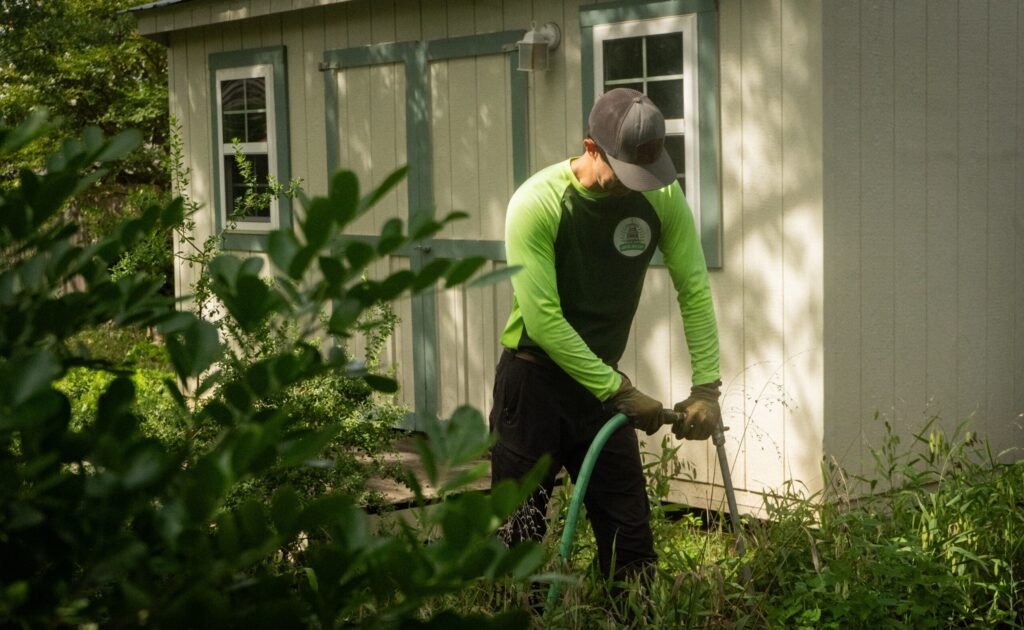
Cedar Park’s thin soils sit right on top of limestone, so roots have little room to begin with, and construction traffic or buried root flares make things worse. Our Airspade uses compressed air to aerate compacted soil and uncover buried root collars without cutting roots. We use it often in newer subdivisions near the Parmer Lane corridor, where fill dirt was piled against young trees during the build. Exposing the root flare early helps prevent girdling roots and rot.
Services include:
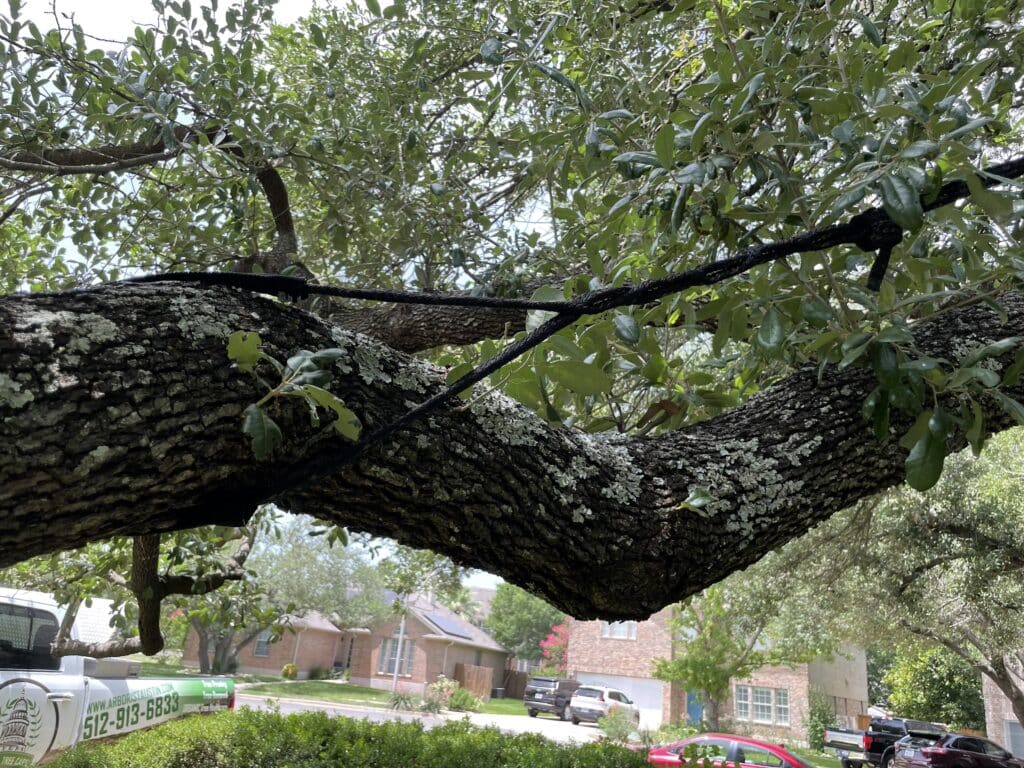
Big live oaks with heavy horizontal limbs are part of what makes older Cedar Park neighborhoods like Carriage Hills so shady. When a limb is over-extended or a trunk has a weak “V” union, we install EHS steel cables, dynamic cable systems or brace rods to take stress off the tree. Cabling works best before a limb fails, so it pairs well with a risk assessment. It lets you keep a mature tree instead of losing it in the next wind storm.
Services include:
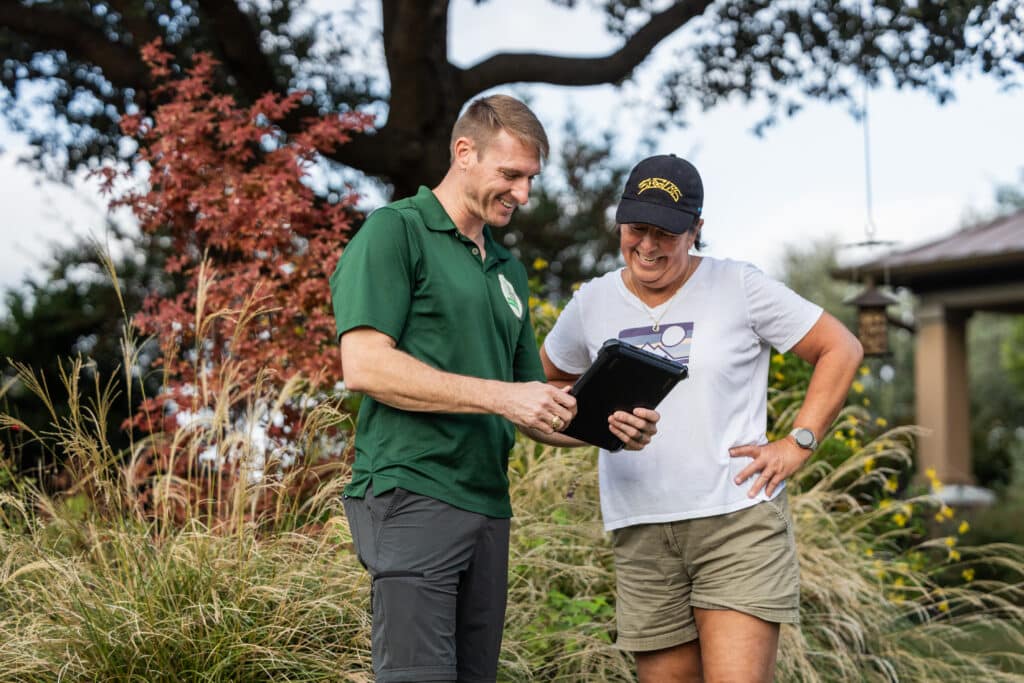
Owner James Burtchell (ISA Certified Arborist TX-3593A, Texas Oak Wilt Qualified, ISA Tree Risk Assessment Qualified) and our certified team diagnose what’s actually going on with your trees. That can mean thinning canopies, discolored leaves, oak wilt symptoms, or a big tree leaning toward the house. We walk your property, explain what we see and give you honest recommendations and a written report if you need one. Many clients call us right after buying a home in Cedar Park so they know what they have.
Services include:
Cedar Park’s rocky, nutrient-poor soil gives trees very little to work with, especially after yard cleanup removes the leaf litter they’d get in the wild. We use a deep-root feeding method that delivers organic amendments straight into the critical root zone. We never use synthetic fertilizers. When needed, we send soil samples to a lab so each program fits your property, whether you have heritage live oaks near Brushy Creek Lake Park or young trees in a new build.
Services include:
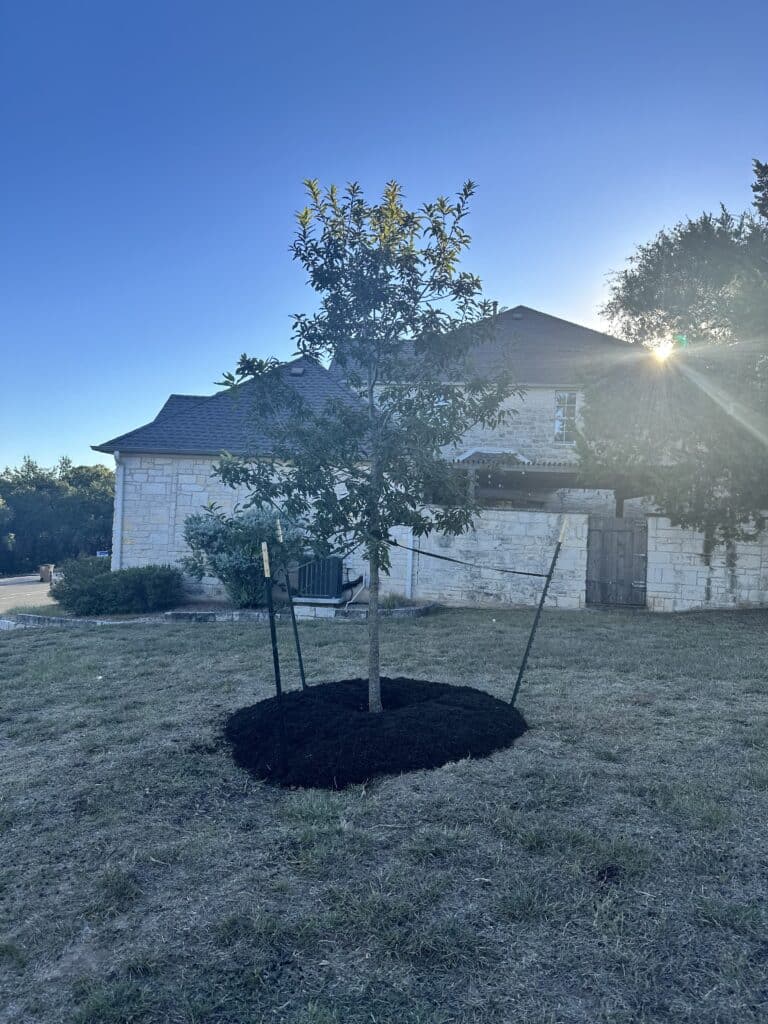
The right tree in the right spot will outlast the house, and in Cedar Park that usually means a drought-tolerant native that can handle shallow soil over limestone. Our arborists help you choose species, source trees from local nurseries, plant them properly and show you how to care for them. Fall is the best planting season here, since cooler weather gives roots time to establish before summer. Every planting is covered by our 6-month warranty.
Services include:
Ball moss is everywhere on Cedar Park’s live oaks and cedar elms, especially on the shaded interior limbs of older trees along Brushy Creek. It isn’t a parasite, but heavy clumps can weigh down limbs and block light. Mistletoe is a true parasite that steals nutrients and can kill limbs. We remove both by hand during pruning and thin the crown so they are less likely to come back.
Services include:
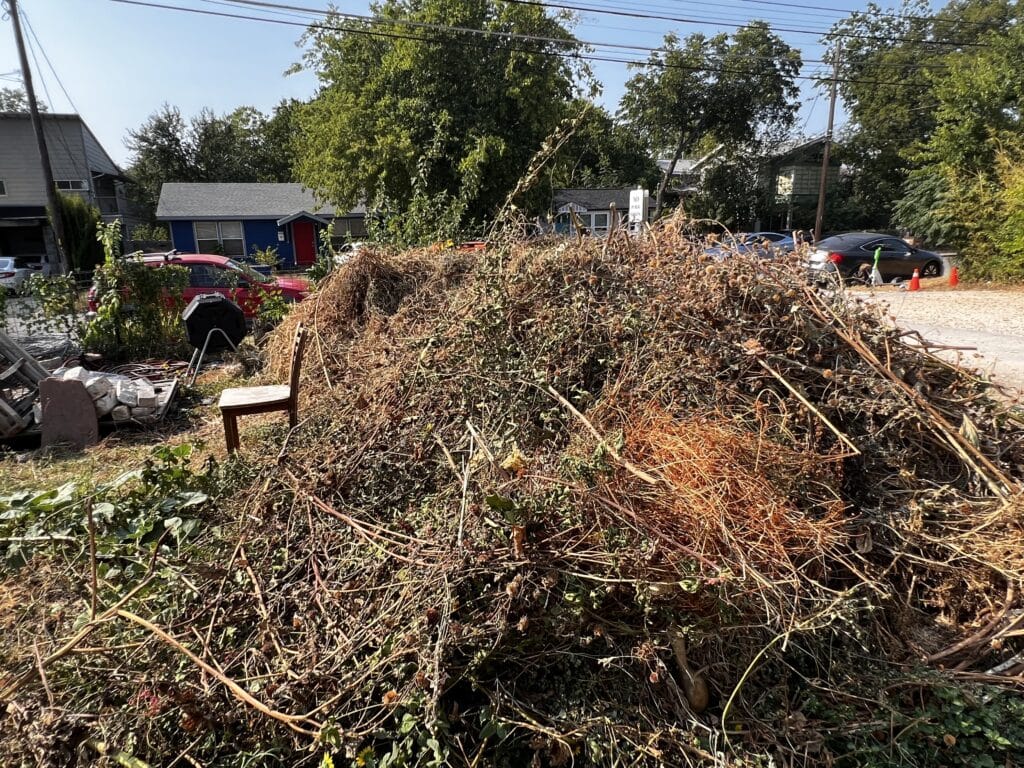
After a storm rolls across Cedar Park or a big pruning job, the brush pile adds up fast. We haul away limbs, storm debris and overgrown vegetation, and we take the organic material to local recycling centers where it becomes mulch and compost. We leave driveways and sidewalks clean. It’s an easy add-on to any trimming or removal job.
Services include:
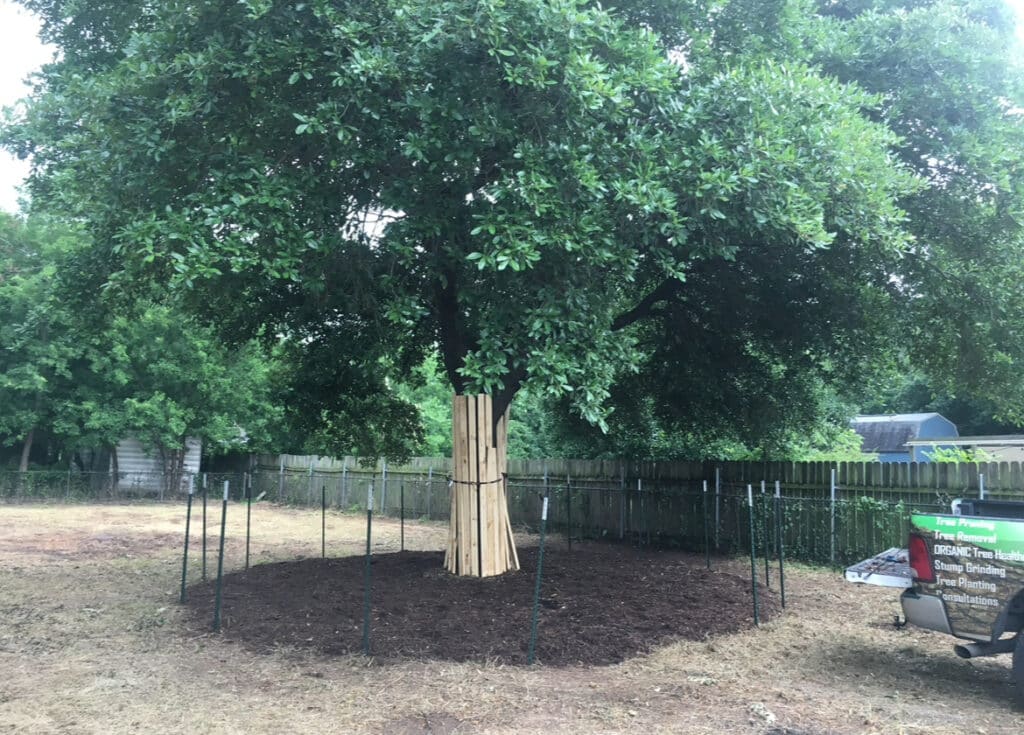
With new construction along Bell Blvd and continuing development across Cedar Park, trees often get hurt by equipment long before anyone notices. Most of the damage happens underground: severed roots, compacted soil and fill piled on the root flare. Our ISA Certified Arborists build site-specific protection plans for builders and homeowners, including root zone fencing, mulching, trunk wrapping and Airspade trenching. If the project is already done, we can put together a recovery plan.
Services include:
Hill Country soil and trees. Cedar Park sits on the eastern edge of the Edwards Plateau, where a few inches of rocky soil cover solid limestone. Near the Buttercup Creek karst, that rock is full of caves and fractures. Trees here grow wide, shallow root systems and depend on a small volume of soil, which is why compaction, grade changes and drought hit them so hard. We factor that into every pruning cut, fertilization plan and removal we do in the city.
On your street, not just in your city. Our crews come up US 183 and the 183A Toll Road and work throughout Cedar Park: along Cypress Creek Rd in Cypress Creek and Cypress Canyon, off RM 1431 / Whitestone Blvd in Whitestone Oaks and Buttercup Creek, near Lakeline Blvd in Lakeline Oaks, and down Anderson Mill Rd in Anderson Mill West. We also serve the neighborhoods around Brushy Creek, including Ranch at Brushy Creek, Crestline at Brushy Creek and Blockhouse Creek.
The work Cedar Park actually needs. In established neighborhoods like Carriage Hills, Oakmont Forest and Forest Oaks, most of our work is maintaining big live oaks over roofs, pools and driveways, plus ball moss removal and cabling for heavy limbs. In newer builds near the Parmer Lane corridor and the Bell District, it’s often root collar excavation, soil aeration and fertilization for trees that took a hit during construction. Near green spaces like Brushy Creek Lake Park and Milburn Park, we also see a lot of juniper and hackberry that need clearing or thinning.
Rules and seasons that matter here. Texas A&M Forest Service advises against pruning or wounding oaks from February through June because of oak wilt, and Cedar Park’s code treats oak wilt–diseased trees and cut oak wood as a hazard. Our owner is Texas Oak Wilt Qualified (TXOWQ-134). We sterilize blades between jobs and seal oak cuts year-round. For properties under development, Cedar Park protects trees 8 inches and larger and heritage trees 26 inches and larger, and we can help you work through those requirements before anything is cut.
Our owner holds a Bachelor of Forest Science from Texas A&M and is an ISA Certified Arborist, and we have more certified arborists on the team. Many Cedar Park tree companies don’t have a single certified arborist. We do, and every estimate starts with one.
Live oaks are the most valuable trees on most Cedar Park lots, and oak wilt is their biggest threat. As Texas Oak Wilt Qualified arborists, we time oak pruning around the February–June risk window, sterilize our tools and paint every oak cut.
If a tree can be saved, we’ll tell you. If it can’t, we’ll explain why. Our clients say our consultations are the most informative they’ve had, and we’d rather earn a long-term client than a one-time removal.
We fertilize with organic amendments only, use lab soil testing when needed and treat the soil as part of the tree. It’s better for your trees and for Brushy Creek and the other waterways downstream.
Capitol Tree Care is owned by James and Emily Burtchell and carries general liability, workers’ compensation and auto/equipment insurance. Our crews clean up so well you can’t tell we were there.


Capitol Tree Care provides tree trimming services in Cedar Park, TX and throughout the surrounding Williamson and Travis County communities. From Leander to the north to Anderson Mill and Jollyville to the south, our certified arborists are close by.
Tree trimming cost in Cedar Park depends on the size and number of trees, how close they are to your home or power lines, and the type of pruning needed. A single young tree costs far less than several mature live oaks over a roof. We give free, itemized estimates after an ISA Certified Arborist looks at your trees in person, so you know exactly what you’re paying for before we start.
The safest time to prune oaks in Cedar Park is July through January. Texas A&M Forest Service advises against pruning or wounding oaks from February through June, when the beetles that spread oak wilt are most active. Because so many Cedar Park live oaks share connected root systems, one infected tree can spread the disease down a whole street. We sterilize our tools and paint every oak cut year-round.
Cedar Park’s tree ordinance mainly applies to development, such as new site plans and subdivisions. Under the 2019 revisions, trees 8 inches in diameter and larger are protected and heritage trees are 26 inches and larger, with mitigation fees for removing them. Rules can change and every property is different, so we recommend confirming with the City of Cedar Park before removing a large tree. We’re happy to help you figure out what applies to your lot.
Stump grinding cost depends mainly on the stump’s diameter, the number of stumps, how much surface root grinding you want and how easy it is to reach. Cedar Park’s rocky ground can also affect how deep we can grind. We quote stump grinding for free, either with a tree removal or on its own, and we backfill so you can replant.
Yes. We work throughout Cedar Park, including Buttercup Creek, Twin Creeks, Cypress Creek, Silverado, Whitestone Oaks, Lakeline Oaks and the Brushy Creek neighborhoods near Brushy Creek Lake Park. We also serve nearby Leander, Brushy Creek and Round Rock. If you’re not sure whether we cover your street, give us a call at 512-913-6833.
An ISA Certified Arborist has passed a professional exam and keeps up with continuing education on tree biology, pruning standards and safety. That matters in Cedar Park, where a bad cut on a live oak during oak wilt season can put your whole neighborhood’s trees at risk. Our owner is also a degreed forester and an ISA Qualified Tree Risk Assessor, so you get an accurate diagnosis, not a guess.
Ball moss usually isn’t killing your tree. It’s an epiphyte that gets its nutrients from the air, not from the tree. It does tend to collect on shaded, weak or dying interior limbs, and heavy clumps add weight and look unsightly. Mistletoe is different: it’s a parasite that can weaken limbs. We remove both during pruning and thin the canopy to let in light.
Whether your trees shade a backyard in Buttercup Creek or a new build off Parmer Lane, our ISA Certified Arborists are ready to help. Request a free estimate for tree trimming, removal or plant health care anywhere in Cedar Park, Leander and the surrounding area.